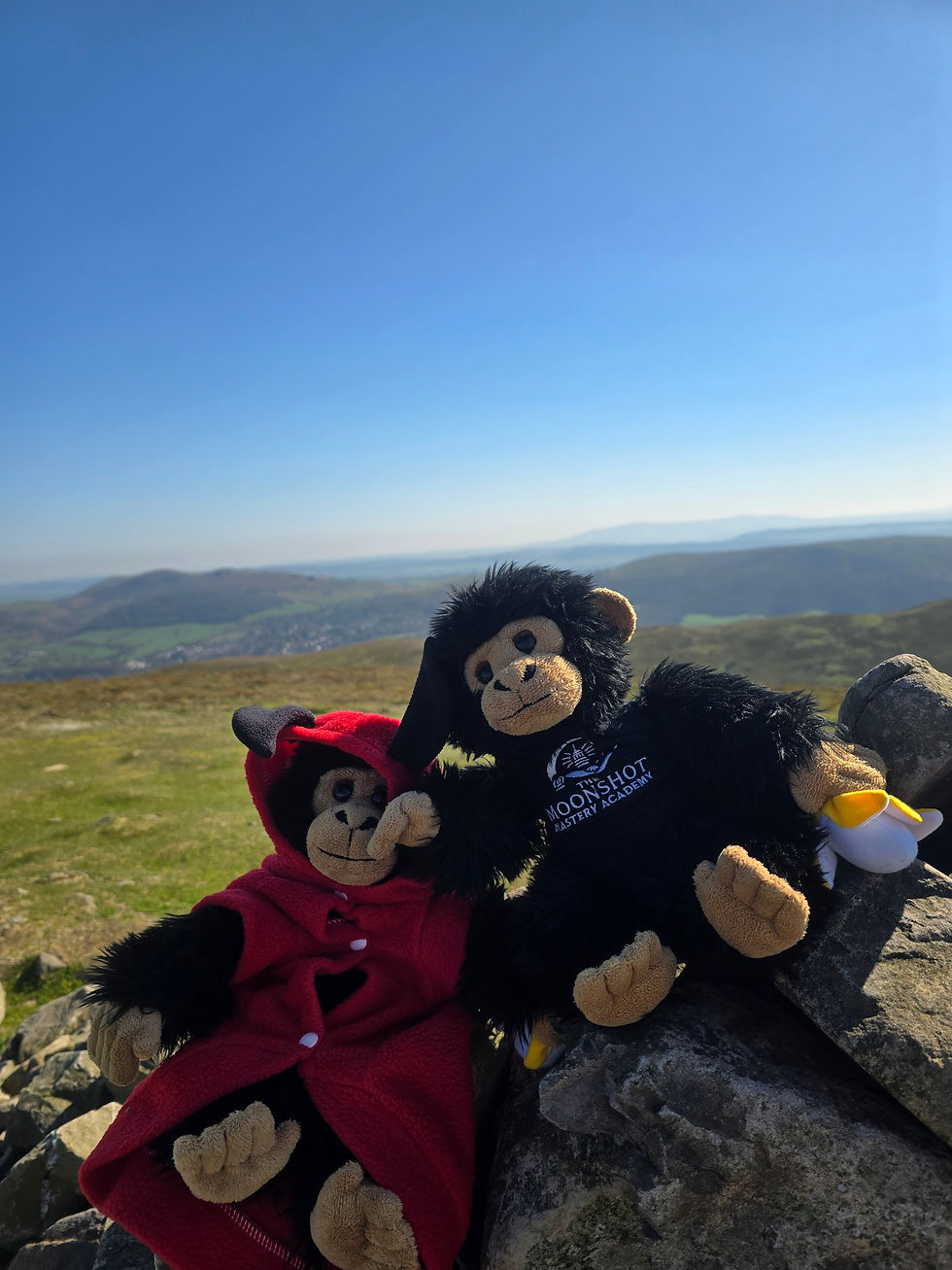
Pillar 5: NURTURE after awakening. At the Mull Of Galloway
- Matt Love
- Feb 4
- 4 min read

What comes after awakening is not momentum, but care.

It has been a while since I last wrote here. The previous piece, Awaken, was published on October 30th, and since then life has not unfolded neatly or symbolically, but in the ordinary, testing, often unglamorous way that real integration tends to happen. I want to be clear about something from the outset: this is not a story about the liminal phase itself. That phase exists, and I have lived it, but what follows is about what comes after, about what it takes to remain human, grounded, and relational once the initial clarity has already arrived.
This is Nurture.
Not as an abstract pillar, not as an aspirational concept, but as a lived requirement.
Awakening Changes What You See, Not What You Can Carry
Awakening does something profound: it rearranges perception. You begin to see patterns in your life, in your family, in your relationships, in your own nervous system. You understand why you became who you became. You recognise your protectors. You name your wounds. You feel the truth of it in your body.
What awakening does not do is automatically expand your capacity.
You can see clearly and still be overwhelmed. You can understand your trauma and still react from it. You can know your direction and still struggle to live it day to day.
Without nurture, insight becomes another demand placed on a system that is already working hard to survive.
What Nurture Actually Is
From an Internal Family Systems perspective, nurture is not about self-improvement or self-control. It is about relationship, specifically, the relationship between Self and the parts that once kept you alive.
In this season of my life, those parts have been loud, not because something has gone wrong, but because life has been turbulent, uncertain, and emotionally demanding.
There is a part of me that faces problems directly, scanning, analysing, anticipating, trying to see every possible outcome before it arrives. I often think of this as my Wall Facer, the part that believes safety comes from foresight and cognitive endurance.
There is another part that grows tired of staring at the wall and wants action instead, decisive change, escape, rupture, a clean break. This is my Wall Breaker.
Both are protectors. Both are intelligent. Both were shaped in environments where waiting, softness, or dependence did not feel safe.
Nurture after awakening is not asking these parts to disappear. It is teaching them that they no longer need to run the system.
When Relationships Become the Lens
One of the more subtle challenges in this period has been relational.
I keep returning to the metaphor of the sophon from The Three Body Problem, an almost invisible observer that interferes with systems not through force, but through constant monitoring and distortion of information. In trauma, we often carry an internal sophon: a hypervigilant part that watches tone, timing, pauses, shifts in energy, and micro changes in connection.
But in real relationships, something more complex can happen. At times, a partner can unconsciously become the sophon. Not because they are manipulative or unsafe. Not because they intend to control .But because our nervous system, already sensitised, begins to orient around them as the primary reference point for safety, meaning, and regulation. A delayed message starts to carry disproportionate weight. Silence becomes a story. Closeness triggers fear of loss; distance confirms it. The relationship is no longer just a relationship, it becomes a regulatory system. Nurture, in this context, is not about blaming yourself or the other person. It is about gently reclaiming regulation, so that connection can remain connection, rather than becoming survival.
Staying With the Body, Not Just the Story
During turbulent periods, old strategies resurface easily. Food, distraction, control, overworking, withdrawal, intensity, these are not moral failures; they are remembered solutions.
IFS explains this simply: when the nervous system senses threat or instability, protectors step forward automatically. Nurture is not forcing better behaviour. It is creating enough internal safety that those behaviours are no longer required. That safety is built slowly, through rhythm, through consistency, through listening to the body before asking it to perform, and through allowing parts to rest without shaming them for having existed.
The Quiet Work of Nurture after Awakening
Nurture does not feel dramatic. It often feels disappointingly ordinary. It looks like pacing instead of pushing. It looks like choosing regulation over explanation. It looks like staying present when the urge is to flee or fix. It looks like letting Self lead, even when progress appears slower on the surface. A lighthouse does not chase ships, prove its value, or panic in poor visibility. It stays lit, precisely because others may need it when conditions worsen. Nurture is learning to stay lit for yourself.
Why This Matters
This phase matters because it is what makes awakening sustainable.
Without nurture, insight hardens into pressure. Without nurture, self awareness turns into self criticism. Without nurture, relationships become sites of regulation rather than places of meeting. Nurture is where the nervous system learns that the truth it has seen is not dangerous, and that the life it is moving toward does not require constant vigilance to survive. Moonshot Mastery. This work lives at the heart of Moonshot Mastery and the Moonlight Master Path: trauma informed, relational, paced by safety rather than force, and grounded in lived experience rather than theory alone.
If you are here clear but tired, aware but stretched, nothing has gone wrong. You are not failing to move forward. You are learning how to stay.


Comments